Awning systems on RVs in Central Florida take more abuse from the natural environment than awnings in any other region where these rigs commonly operate. The combination of daily afternoon thunderstorms during the rainy season, extreme UV, and Florida's unique biological environment - specifically airborne pollen, algae spores, and mold - creates conditions that shorten awning fabric life to roughly half the rated lifespan.
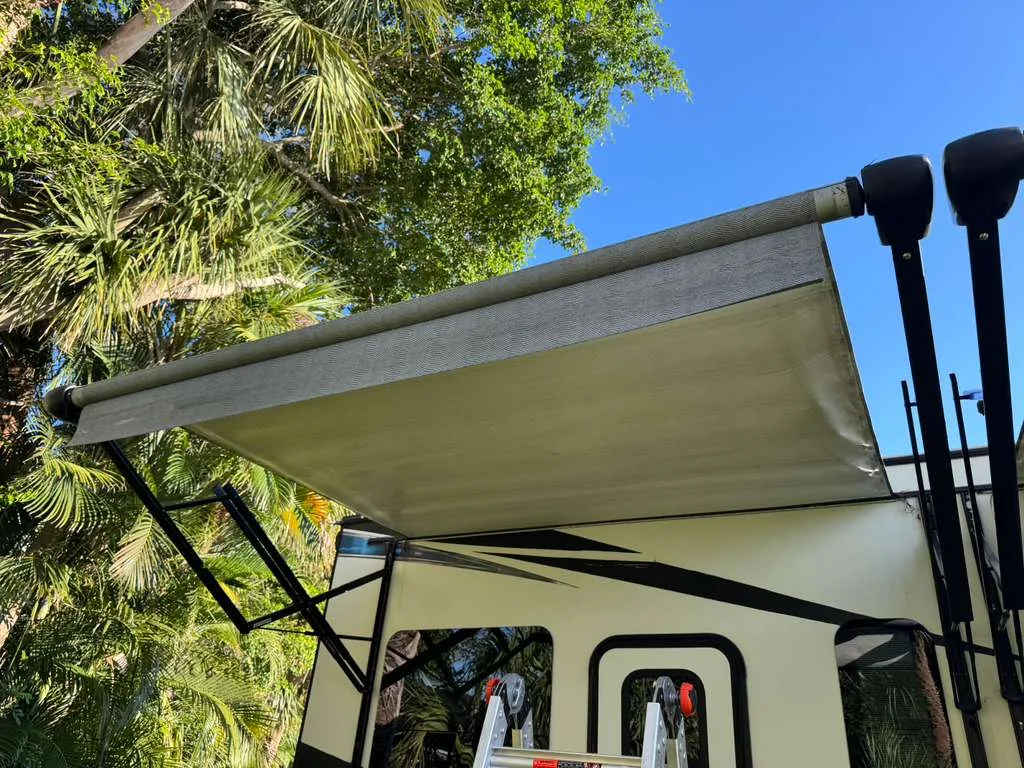
Florida's rainy season runs from June through September, and Central Florida - located in the interior of the peninsula - receives more afternoon convective rainfall than coastal areas. An awning left extended during an afternoon thunderstorm at Lake Louisa State Park or Wekiwa Springs can accumulate 20 to 30 pounds of water in the fabric sag between the roller and the leading edge within 15 minutes of rainfall onset. This water weight creates tension loads on the arm pivot hardware that exceed design limits.
The typical manual instruction is to retract awnings when leaving the site - but Florida's afternoon storms are notoriously fast-developing, and many RV owners are caught off-guard. A wind sensor system that auto-retracts the awning is a worthwhile upgrade for Florida full-timers.
Oak pollen and algae spores are the biological agents that reduce awning fabric life fastest in this region. From late February through April, Central Florida's live oaks produce a heavy pollen load that settles on every horizontal surface including awning fabric. Pollen contains organic acids that, when wetted by rain and dried repeatedly in the Florida sun, etch the vinyl coating of acrylic awning fabrics.
After two or three pollen seasons, the etched surface becomes rough, which traps more pollen and airborne algae spores, which grow in Florida's warmth and humidity. We see awnings at campgrounds from Magnolia Park to Disney Fort Wilderness that are uniformly green-tinged by mid-summer from algae colonization. Regular cleaning with a dilute bleach solution - no more than 1 percent concentration to avoid damaging the fabric coating - interrupts the cycle and significantly extends fabric life.
The temperature swing between a hot Florida afternoon and a cooler evening causes the roller spring mechanism to fatigue faster than in moderate climates. Awning tension springs are typically a cold-wound carbon steel, which loses tension (takes a set) more rapidly when it is repeatedly heated to 140-plus degrees in a Florida sun-baked roller tube and then cooled.
A spring that is out of tension leaves the fabric loose on the roller, which causes it to flutter in wind - even light wind - which is the primary mechanism for hem-seam fatigue and eventual fabric tearing. We re-tension or replace springs on awnings older than 5 years as a preventive measure, because by that age the spring tension in a Florida-based rig is reliably below the functional threshold.
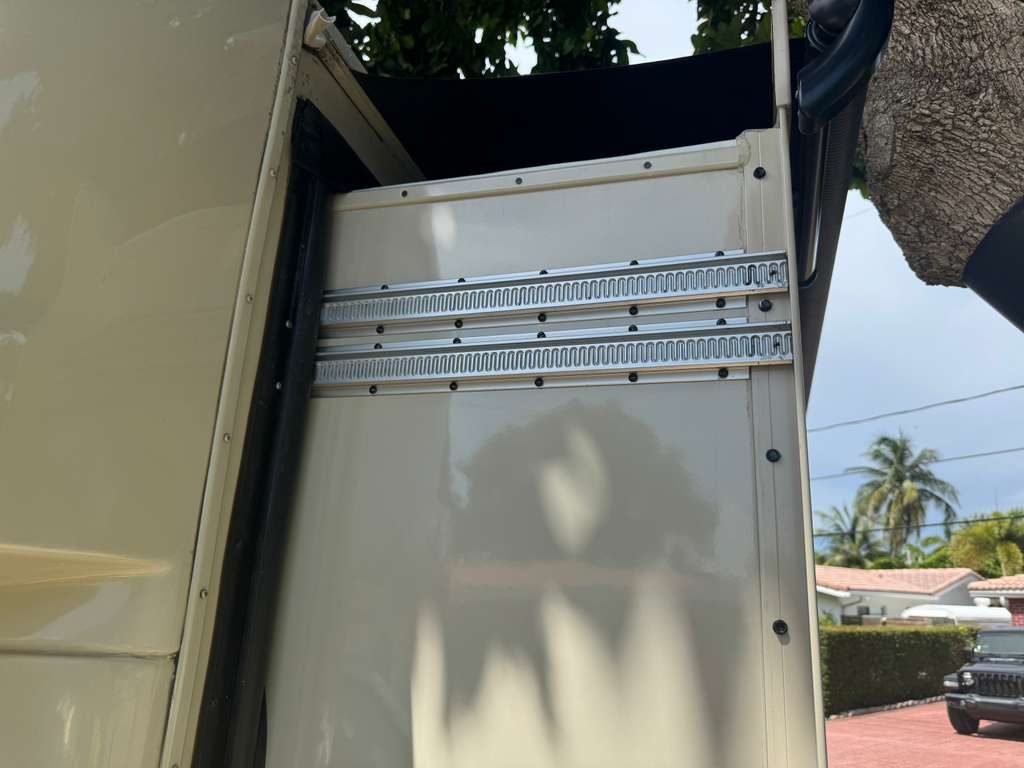
Slide topper awnings - the small awnings that extend over the slide-out rooms on many fifth wheels and Class A motorhomes - have a harder life than the main awning because they are always deployed when the slide is out and cannot be retracted during storms independently. Slide toppers at Kelly Park Rock Springs and other campgrounds with heavy oak canopy are frequently impacted by falling branches and acorns, which create small punctures that become large tears on the next deployment. We recommend a Carefree slide topper replacement fabric in a heavier-weight material than the factory spec for any Central Florida rig that parks under tree canopy regularly.
| Brand / Model | Common Issue in Central Florida |
|---|
| Carefree of Colorado electric awning | Motor encoder failures in humid environments - the encoder that provides position feedback to the control board corrodes, causing the awning to partially deploy and stop |
| A&E / Dometic 8500 series | Arm casting cracks at the rafter pivot point from wind load - this is a known failure on units older than 8 years in wind-exposed locations; inspection before each storm season is mandatory |
| Lippert Solera electric | Control board moisture intrusion causing erratic operation - the board housing is not fully sealed against Florida humidity; a board replacement with a conformal-coated aftermarket board is the permanent fix |
| Carefree SlideOut System | Spring-rail guide channel corrosion from humidity - the slide topper spring rails develop surface rust that locks the fabric guide in the channel, preventing smooth extension |
| Zip Dee (Airstream) | Canvas fabric UV fade and coating delamination - Zip Dee canvas performs well but the acrylic coating degrades on the outward-facing center section after 5 to 7 Florida summers, requiring full fabric replacement |
| Dometic 9100 Power Awning | Lead rail end cap cracking from thermal cycling - the plastic end caps on the lead bar split along the molding seam after repeated heat-cool cycles and allow the fabric to begin pulling out of the lead bar channel |