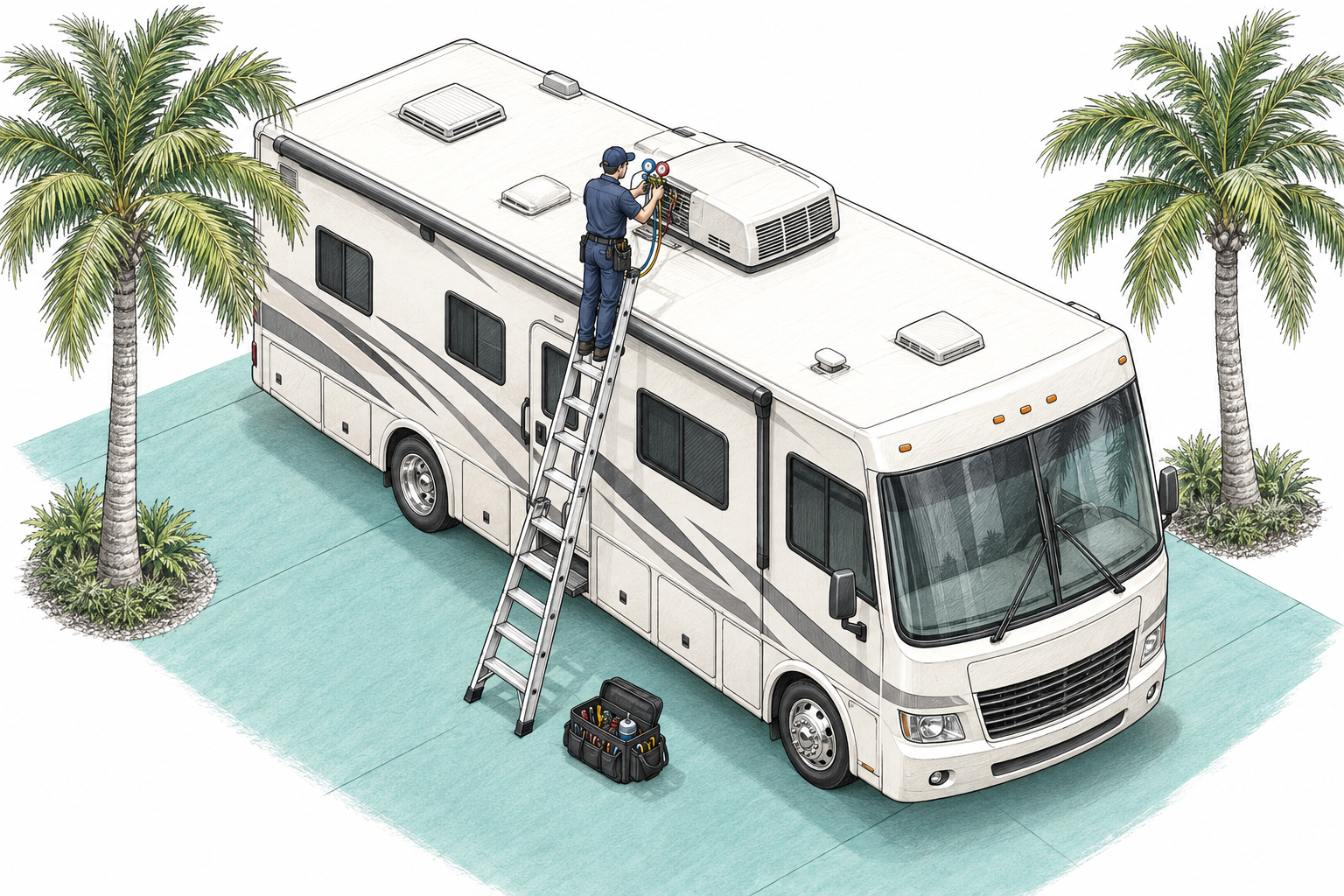
Slide-out systems in Central Florida face a combination of environmental stressors that accelerates wear well beyond what manufacturers anticipate. The combination of high humidity, fine oak and cypress pollen, and the specific gravity of Florida's sandy soil creates conditions where rack-and-pinion gear contamination happens faster, seal rubber degrades more quickly, and electrical connections corrode more aggressively than in drier climates.
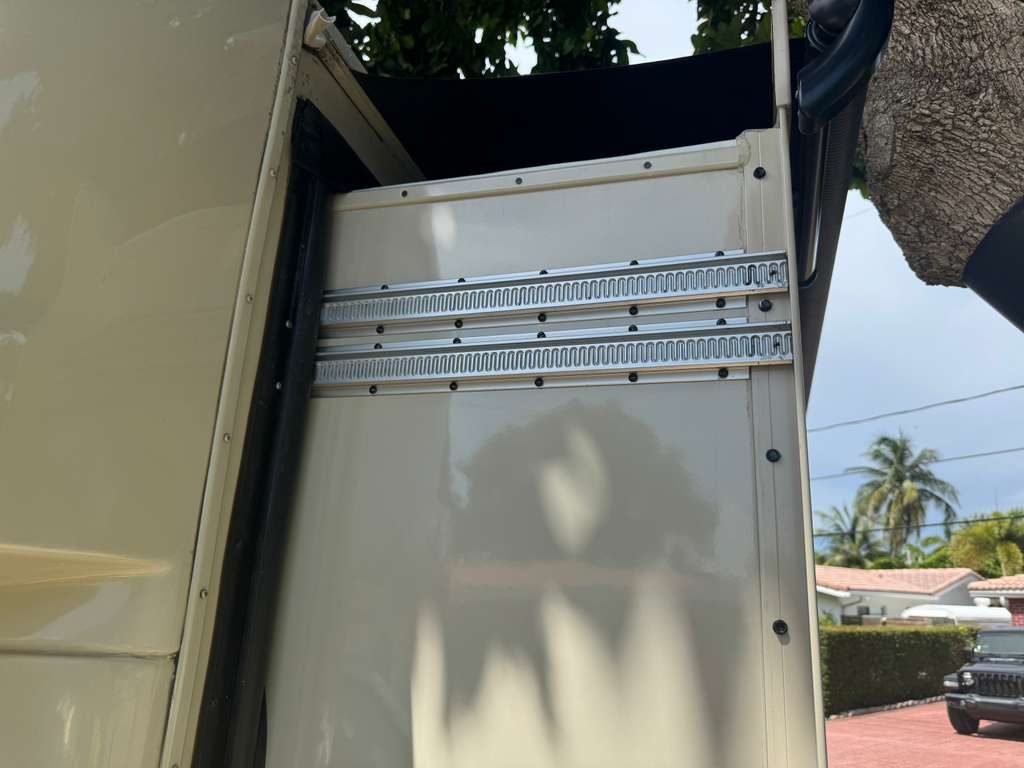
The Lippert Schwintek in-wall slide system dominates the market on fifth wheels and travel trailers sold since 2015, and it is a strong design in moderate climates. In Central Florida, the nylon guide channels that the stainless steel cables route through become breeding grounds for mold and mildew when the RV is stored for even a few weeks without the slide being cycled. Mold growth in the channel stiffens the cable routing, increasing the load on the drive motors.
We see motor current draws 30 to 50 percent above normal on Schwintek systems that have not been exercised and lubricated monthly during the summer storage season. The fix is straightforward - clean the channels, apply a dry PTFE lubricant to the cable runs, and cycle the slide several times - but owners who do not know to look for it end up with burned-out motors.
Hydraulic slide-out systems on larger Class A motorhomes introduce a different Florida problem: fluid viscosity changes. Hydraulic fluid rated for a standard temperature range thins significantly in a generator compartment or hydraulic bay that reaches 130 to 140 degrees on a Florida summer day.
Thinned fluid causes slide cylinders to drift slightly under load, which shows up as a slide that sags at the outer edge when extended on a hot afternoon. The long-term fix is switching to a high-temperature hydraulic fluid rated for 200-degree-plus operation - a straightforward fluid change that makes a significant difference in slide-out stability during the summer months at campgrounds like Lake Louisa State Park where afternoon temperatures are consistently extreme.
The deck and floor junction at the slide opening is the point most vulnerable to long-term Florida weather damage. Rain driven horizontally during the afternoon thunderstorms common from June through September enters through any gap in the wiper seal system and pools at the slide floor junction. The plywood sub-floor common in this area of the RV wicks moisture and begins delaminating and softening within a single wet season.
By the time an owner notices the soft spot, the floor repair has escalated from a seal replacement to a floor section replacement. We inspect wiper seals and slide-to-floor-junction seals on every service call regardless of the stated reason for the visit, because catching a degraded wiper seal early prevents a much more expensive floor repair.
Road vibration on Florida's highways - particularly I-4, US-27, and the county roads leading to campgrounds like Kelly Park Rock Springs and Magnolia Park - contributes to roller wear on slide-out floor support systems. The steel rollers that support the slide deck as it travels in and out develop flat spots after several years of use on rough road surfaces.
A flat spot on a roller creates an impact load each time the roller completes a revolution, which transfers into the slide box frame and the rack gear engagement. Replacing worn rollers before they cause rack gear damage is a maintenance step we include in every annual slide-out service.
| Brand / Model | Common Issue in Central Florida |
|---|
| Lippert Schwintek in-wall | Cable guide channel contamination from Florida pollen and humidity causing motor overload - monthly lubrication with dry PTFE spray is mandatory in this climate, not optional |
| Lippert Power Gear hydraulic | Fluid viscosity thinning in high-temperature bays causing slide sag and slow operation - high-temp hydraulic fluid upgrade resolves this on most Class A applications |
| Lippert OneControl electric | Hall-effect sensor failures from moisture ingress at the motor connector - a waterproof connector upgrade during any motor service prevents recurrence |
| HWH hydraulic slide (Class A) | Check valve seepage causing one side of a room slide to drift down over 6 to 12 hours - HWH valve bodies are serviceable but require HWH-specific tools and procedures |
| Kwikee electric slide (older units) | Drive gear plastic gear tooth stripping when the rack is dry and contaminated - these gears are no longer OEM-available and require aftermarket sourcing |
| Power Gear electric slide | Motor brush wear - Power Gear motors use carbon brushes that wear down in 5 to 8 years and cause progressively slower travel before total motor failure |
| Slide-out room seals (generic) | Bulb seal compression set in Florida heat and UV - the rubber permanently deforms to the compressed shape and loses the ability to re-expand, leaving gaps at slide corners |