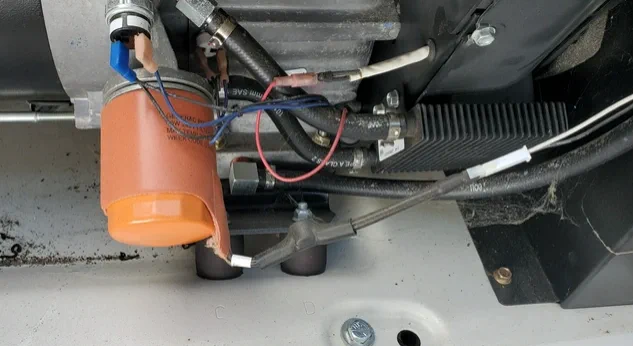
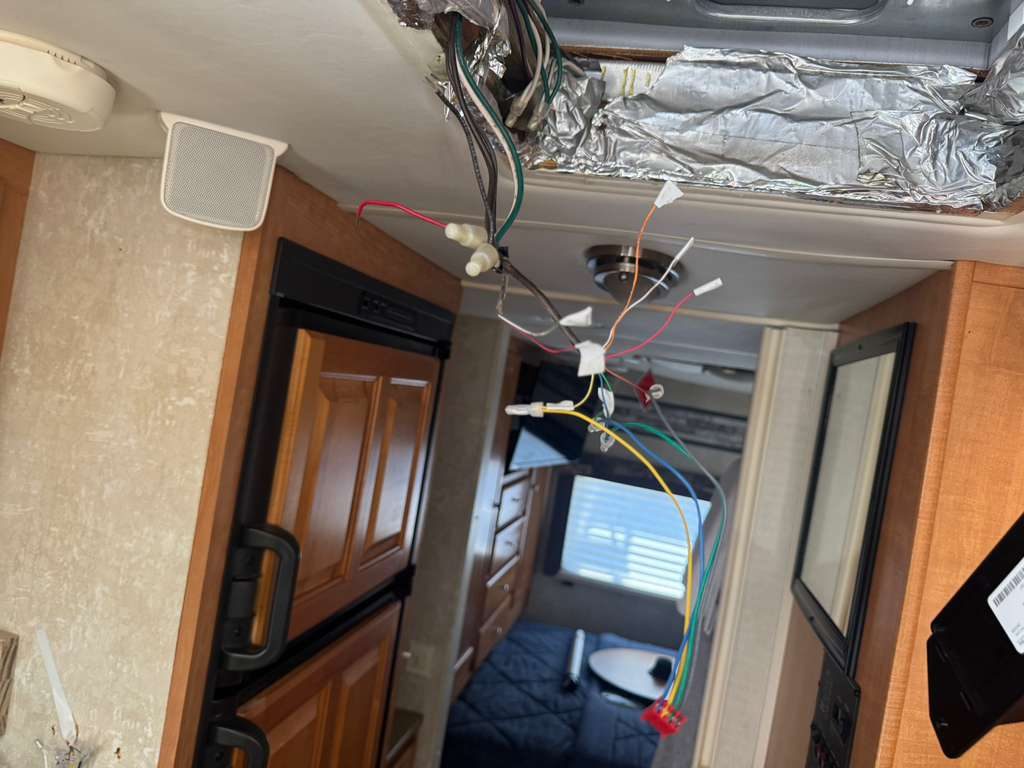
Onan and Cummins generators in Central Florida face two problems that do not exist at the same severity anywhere else in the country: ethanol-contaminated fuel and extreme compartment heat. Together they account for roughly 80 percent of the generator service calls we run in the Winter Garden, Clermont, and Kissimmee areas.
Florida law mandates E10 (10 percent ethanol) in all automotive gasoline, and E15 is increasingly available. Ethanol is hygroscopic - it attracts and bonds with water vapor from the air. In Florida's humid environment, E10 fuel stored in a generator tank that is not run weekly can absorb enough moisture within 30 days to cause phase separation, where the ethanol-water mixture drops to the bottom of the tank and the remaining hydrocarbons float on top.
The generator draws from the bottom of the tank, so the first fuel it sees on startup is a water-heavy mix that will not combust properly. The result is a generator that cranks but will not sustain a run, or that runs rough and surges. Onan's 4000 and 5500 series carburetors are particularly vulnerable - the main jet orifice is small enough that even minor varnish deposits from ethanol oxidation block fuel flow completely.
We carry carburetor rebuild kits for both series on every service truck.
Compartment heat is the second failure driver. On a Class A motorhome parked at Disney Fort Wilderness or Lake Louisa State Park with the generator running, the generator compartment temperature in July can exceed 140 degrees Fahrenheit when ambient temperature is 95 and sun loading is direct. Most Onan units are rated for continuous operation to 104 degrees ambient - the compartment temperature is already 36 degrees above that.
Under these conditions, the generator's oil temperature rises to the point where the low-oil-temperature sender trips a false shutdown, or the alternator windings overheat and increase their resistance, causing output voltage to drop. Ensuring proper compartment ventilation - cleaning the intake and exhaust vents of debris and verifying the generator is not being starved for cooling air - is the first step in any summer diagnosis.
Storage-related failures spike between November and March, when snowbirds who have used their rigs all summer park them in Winter Garden driveways or Orange County storage yards for the off-season. A generator that ran perfectly in October will often fail to start in March if the fuel was not stabilized before storage.
We recommend running the generator under 50 percent load for 30 minutes with Sta-Bil 360 Marine (the marine formulation provides better ethanol protection than standard Sta-Bil) added to a full tank, then running the carburetor dry by closing the fuel valve and letting the engine run until it stops. This procedure prevents the varnish deposits that make a 30-minute cleaning job into a half-day carburetor rebuild.
Diesel Onan units (common in Class A diesel pushers at higher-end campgrounds) are more resistant to storage issues but develop their own Florida-specific failure: water-in-fuel from condensation in large fuel tanks that are kept partially empty. A 100-gallon fuel tank that is 30 percent full has 70 gallons of air volume that cycles through the tank vent as temperatures swing. Each cycle deposits a film of condensation on the tank walls.
Over a season, this accumulates enough water to damage injection pump components. We advise diesel RV owners to keep tanks at least 80 percent full during storage in Florida's humidity.
| Brand / Model | Common Issue in Central Florida |
|---|
| Onan 4000 MicroQuiet (gasoline) | Carburetor main jet varnishing from ethanol fuel - the most common generator failure we see in Central Florida; a full cleaning and jet replacement resolves most no-start and surge complaints |
| Onan 5500 Commander (gasoline) | Fuel pump diaphragm failures after extended storage - the rubber diaphragm hardens in Florida heat and loses its pumping ability, causing intermittent no-starts and lean-run conditions |
| Cummins Onan HDKAJ (diesel) | Injector O-ring failures from biodiesel blends - Florida's diesel fuel often contains soy-derived biodiesel that is incompatible with older Buna-N O-ring compounds |
| Onan 7500 Diesel (Class A pushers) | Water-in-fuel damage to injection pump from condensation in partially-filled tanks during storage - kept-full tank policy prevents this |
| Generac iX2000 (portable) | Carburetor float valve sticking from ethanol varnish - these portable units are frequently left with fuel in the bowl for months, and the small float valve is highly susceptible |
| Honda EU2200i (portable) | Spark arrester clogging from Florida oak pollen and debris - a clogged arrester causes backpressure that drops output power by 25 to 40 percent and can eventually cause valve damage |
| Briggs & Stratton inverter generators | AVR (automatic voltage regulator) failures when operated near their rated capacity in high-heat conditions - output voltage drifts low and damages connected electronics |