RV Repair Winter Garden provides mobile rv generator service throughout Orange, Lake, and Osceola counties. Our certified technician comes to your wherever your RV is parked. Flat-rate pricing quoted before we start - no towing required.
Our certified mobile technicians provide rv generator service throughout Winter Garden and all of Orange, Lake, and Osceola counties. We come to your wherever your RV is parked - no towing, no shop drop-off required.
Svc Generator in Winter Garden, FLFeat Generator in Winter Garden, FL
Flat-rate pricing is given before any work begins. You approve the price, we do the work. Available 7 days a week, 7 AM to 8 PM.
A standard RV generator service (oil change, filter, spark plug, carburetor inspection, load test) runs $145 to $225 for gasoline units on a mobile call. Diesel generator service runs $175 to $295. Adding an air filter and fuel filter brings the total to $185 to $265 for a complete gasoline service.
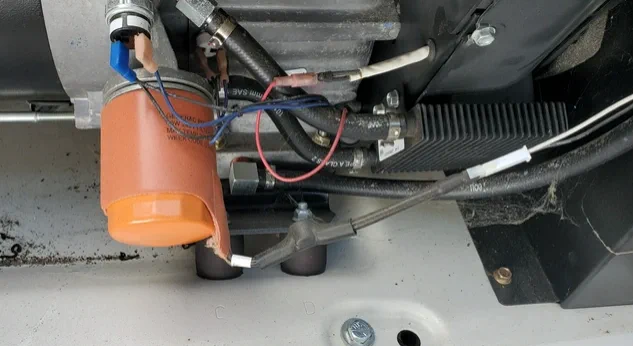
A complete generator service includes: oil and filter change, spark plug replacement (gasoline), air filter inspection and replacement if needed, fuel filter replacement, carburetor bowl cleaning and jet inspection, battery load test, generator start and run test, and a load test at 50% and 100% rated output to verify performance under demand.
Every 100 hours of run time or annually, whichever comes first. In Florida's humid environment, the annual service interval is more important than in dry climates even for low-use generators - the carburetor fuel bowl develops varnish deposits from ethanol fuel sitting in it between uses, regardless of total run hours.
SAE 30 for temperatures consistently above 32 degrees F - which is essentially year-round in Winter Garden. 10W-30 is acceptable and provides better cold-morning flow on the rare days below 40 degrees F in January. Synthetic 10W-30 is increasingly popular; the service interval remains the same regardless of synthetic vs. conventional.
Not a full cleaning every time - but a bowl drain and inspection at every service is standard in Florida. If the generator has been unused for 3 or more months between services, a full cleaning is warranted. In Florida, ethanol fuel sitting in a carburetor for 60-plus days reliably leaves varnish deposits that require cleaning.
A load test runs the generator at a controlled current draw (typically 50% and 100% of rated capacity) while monitoring voltage, frequency, and temperature. This reveals weak capacitors in the AVR that only show up under load, a carburetor main jet that flows correctly at idle but stumbles at full demand, and a cooling system struggling at full output in Florida heat.
An oil change and air filter replacement are straightforward DIY tasks if you're comfortable with small engines. Spark plug replacement requires knowing the gap specification for your specific generator model.
Carburetor cleaning requires disassembly and careful jet handling. Load testing requires a load bank or calibrated resistive load - not DIY-practical.
Yes - add STA-BIL or PRI-G to any fuel that will sit in the generator fuel system longer than 30 days. In Florida, where generators often sit unused from October through May (cool season without AC), fuel stabilizer prevents the ethanol phase separation that causes carburetor gumming. A stabilized fuel system resists varnish formation for 12 to 24 months.
Run the first 2 hours at light load (no AC, just a few lights and small appliances). Change the oil at 20 hours (break-in oil carries metal particles from the new engine surfaces).
Then operate normally. Do not run at full load continuously during the first 5 hours - let the rings seat against the cylinder walls at moderate load first.
Monthly exercise under load (run the AC for 2 hours) is the single most effective maintenance habit - it prevents ethanol degradation in the carb, exercises the start battery, and ensures the unit will start when you need it. Paired with an annual full service (oil, filters, carb inspection), these two habits prevent 80% of the no-start calls we receive.
FAQ
Common Questions
A standard RV generator service (oil change, filter, spark plug, carburetor inspection, load test) runs $145 to $225 for gasoline units on a mobile call. Diesel generator service runs $175 to $295. Adding an air filter and fuel filter brings the total to $185 to $265 for a complete gasoline service.
A complete generator service includes: oil and filter change, spark plug replacement (gasoline), air filter inspection and replacement if needed, fuel filter replacement, carburetor bowl cleaning and jet inspection, battery load test, generator start and run test, and a load test at 50% and 100% rated output to verify performance under demand.
Every 100 hours of run time or annually, whichever comes first. In Florida's humid environment, the annual service interval is more important than in dry climates even for low-use generators - the carburetor fuel bowl develops varnish deposits from ethanol fuel sitting in it between uses, regardless of total run hours.
SAE 30 for temperatures consistently above 32 degrees F - which is essentially year-round in Winter Garden. 10W-30 is acceptable and provides better cold-morning flow on the rare days below 40 degrees F in January. Synthetic 10W-30 is increasingly popular; the service interval remains the same regardless of synthetic vs. conventional.
Not a full cleaning every time - but a bowl drain and inspection at every service is standard in Florida. If the generator has been unused for 3 or more months between services, a full cleaning is warranted. In Florida, ethanol fuel sitting in a carburetor for 60-plus days reliably leaves varnish deposits that require cleaning.
A load test runs the generator at a controlled current draw (typically 50% and 100% of rated capacity) while monitoring voltage, frequency, and temperature. This reveals weak capacitors in the AVR that only show up under load, a carburetor main jet that flows correctly at idle but stumbles at full demand, and a cooling system struggling at full output in Florida heat.
An oil change and air filter replacement are straightforward DIY tasks if you're comfortable with small engines. Spark plug replacement requires knowing the gap specification for your specific generator model.
Carburetor cleaning requires disassembly and careful jet handling. Load testing requires a load bank or calibrated resistive load - not DIY-practical.
Yes - add STA-BIL or PRI-G to any fuel that will sit in the generator fuel system longer than 30 days. In Florida, where generators often sit unused from October through May (cool season without AC), fuel stabilizer prevents the ethanol phase separation that causes carburetor gumming. A stabilized fuel system resists varnish formation for 12 to 24 months.
Run the first 2 hours at light load (no AC, just a few lights and small appliances). Change the oil at 20 hours (break-in oil carries metal particles from the new engine surfaces).
Then operate normally. Do not run at full load continuously during the first 5 hours - let the rings seat against the cylinder walls at moderate load first.
Monthly exercise under load (run the AC for 2 hours) is the single most effective maintenance habit - it prevents ethanol degradation in the carb, exercises the start battery, and ensures the unit will start when you need it. Paired with an annual full service (oil, filters, carb inspection), these two habits prevent 80% of the no-start calls we receive.
RV Problem? We Come to You.
Same-day service across Winter Garden and all of Central Florida. Guaranteed flat-rate pricing before we start.