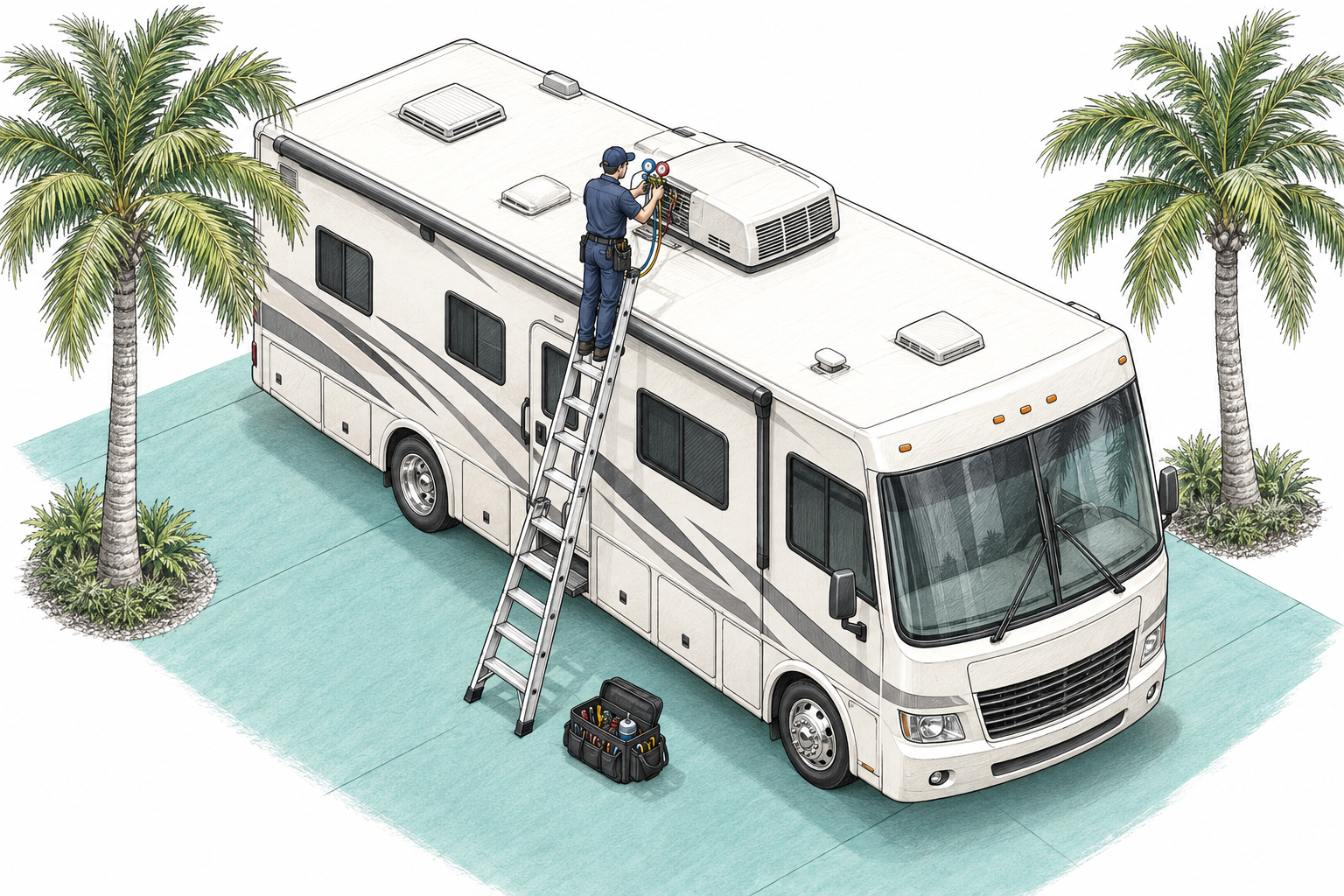
RV Repair Winter Garden provides mobile rv battery bank installation throughout Orange, Lake, and Osceola counties. Our certified technician comes to your wherever your RV is parked. Flat-rate pricing quoted before we start - no towing required.
Our certified mobile technicians provide rv battery bank installation throughout Winter Garden and all of Orange, Lake, and Osceola counties. We come to your wherever your RV is parked - no towing, no shop drop-off required.
Feat Ac Repair in Winter Garden, FLFeat Slide Out in Winter Garden, FL
Flat-rate pricing is given before any work begins. You approve the price, we do the work. Available 7 days a week, 7 AM to 8 PM.
How Our RV Battery Bank Installation Service Works
1Call us with the details. Tell us about the rv battery bank installation issue and where your RV is located. We provide a flat-rate quote over the phone.
2Tech dispatched to your location. A certified technician drives to your wherever your RV is parked with the tools and parts needed.
3Repaired on-site, same day. Most rv battery bank installation jobs are completed in a single visit. No waiting, no shop drop-off, no towing fees.
4Pay only what was quoted. The price you approved upfront is the price you pay. No surprise charges after the fact.
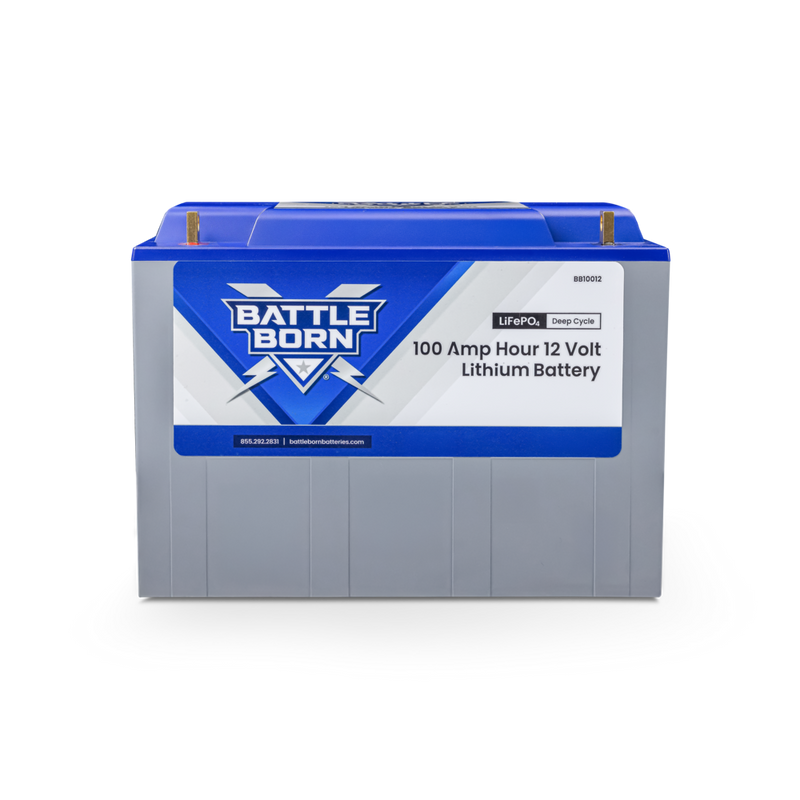
Battery bank installation (not including battery cost) runs $145 to $350 for wiring, cable sizing, fusing, and installation of 2 to 4 batteries. A complete turn-key installation including batteries, battery monitor, and converter upgrade runs $850 to $2,800 depending on bank size and chemistry.
For 12V systems, connect 2 batteries in parallel: positive to positive, negative to negative. This doubles capacity (amp-hours) while maintaining 12V. Use identical cable lengths from each battery to the bus bars or main connection to equalize charge and discharge rates between the two batteries.
4/0 AWG welding cable for the main battery-to-chassis and battery-to-inverter runs on large banks. 2/0 AWG for mid-size banks (200 to 400Ah) and 4 AWG minimum for smaller 100Ah banks at up to 100 amps draw.
Always size for the highest expected current, not the average draw. Undersized wiring is the leading cause of RV electrical fires.
A battery monitor measures actual amp-hours in and out of the bank, giving you a real-time state-of-charge percentage rather than relying on voltage alone (which is unreliable for lithium and unreliable under load for lead-acid). A Victron BMV-712 or Renogy Rover monitor is a $75 to $150 investment that eliminates guessing about remaining battery capacity.
Yes - a main battery disconnect switch allows cutting all power from the battery bank for storage, maintenance, or emergency. A 200-amp (or appropriately sized) knife-blade or rotary disconnect switch on the battery positive cable is a standard installation item. It prevents parasitic drain during storage and provides a manual safety shutoff.
A bus bar is a copper conductor bar that allows multiple circuits to connect to the battery bank at a central point rather than stacking multiple lugs on a single battery terminal. For any bank with more than 2 outgoing circuits, a bus bar improves both the electrical connection quality and the installation neatness. We include positive and negative bus bars in all multi-circuit battery bank installations.
Always disconnect the negative cable first and reconnect it last. This prevents accidental shorts if the positive cable touches a grounded chassis part.
Wear safety glasses when working near lead-acid batteries due to hydrogen gas risk. Lithium batteries do not off-gas hydrogen but their high fault current can cause severe arc flash - a proper disconnect switch is essential.
Yes - parallel batteries can be added as long as the new batteries are identical to the existing ones (same brand, model, age, and chemistry). Adding a new battery to a bank with older batteries is not recommended as the new battery will be pulled down to the performance level of the older ones. Expand all at once for best results.
The battery compartment designed by the manufacturer is the optimal location. If expanding beyond the designed space, a secondary battery box in a ventilated basement compartment works well. Keep batteries away from the furnace, water heater, and any ignition sources.
Lead-acid batteries off-gas hydrogen - ensure adequate ventilation. Lithium is safer in enclosed spaces but still benefits from ventilation for cooling.
Install a solar maintainer panel (a single 30 to 50 watt panel is sufficient) or a battery tender connected to shore power on a timer. For lithium batteries, store at 50% state of charge (not full and not empty) for long-term storage. For lead-acid, maintain above 80% charge - leaving lead-acid below 50% during storage causes irreversible sulfation.
FAQ
Common Questions
Battery bank installation (not including battery cost) runs $145 to $350 for wiring, cable sizing, fusing, and installation of 2 to 4 batteries. A complete turn-key installation including batteries, battery monitor, and converter upgrade runs $850 to $2,800 depending on bank size and chemistry.
For 12V systems, connect 2 batteries in parallel: positive to positive, negative to negative. This doubles capacity (amp-hours) while maintaining 12V. Use identical cable lengths from each battery to the bus bars or main connection to equalize charge and discharge rates between the two batteries.
4/0 AWG welding cable for the main battery-to-chassis and battery-to-inverter runs on large banks. 2/0 AWG for mid-size banks (200 to 400Ah) and 4 AWG minimum for smaller 100Ah banks at up to 100 amps draw.
Always size for the highest expected current, not the average draw. Undersized wiring is the leading cause of RV electrical fires.
A battery monitor measures actual amp-hours in and out of the bank, giving you a real-time state-of-charge percentage rather than relying on voltage alone (which is unreliable for lithium and unreliable under load for lead-acid). A Victron BMV-712 or Renogy Rover monitor is a $75 to $150 investment that eliminates guessing about remaining battery capacity.
Yes - a main battery disconnect switch allows cutting all power from the battery bank for storage, maintenance, or emergency. A 200-amp (or appropriately sized) knife-blade or rotary disconnect switch on the battery positive cable is a standard installation item. It prevents parasitic drain during storage and provides a manual safety shutoff.
A bus bar is a copper conductor bar that allows multiple circuits to connect to the battery bank at a central point rather than stacking multiple lugs on a single battery terminal. For any bank with more than 2 outgoing circuits, a bus bar improves both the electrical connection quality and the installation neatness. We include positive and negative bus bars in all multi-circuit battery bank installations.
Always disconnect the negative cable first and reconnect it last. This prevents accidental shorts if the positive cable touches a grounded chassis part.
Wear safety glasses when working near lead-acid batteries due to hydrogen gas risk. Lithium batteries do not off-gas hydrogen but their high fault current can cause severe arc flash - a proper disconnect switch is essential.
Yes - parallel batteries can be added as long as the new batteries are identical to the existing ones (same brand, model, age, and chemistry). Adding a new battery to a bank with older batteries is not recommended as the new battery will be pulled down to the performance level of the older ones. Expand all at once for best results.
The battery compartment designed by the manufacturer is the optimal location. If expanding beyond the designed space, a secondary battery box in a ventilated basement compartment works well. Keep batteries away from the furnace, water heater, and any ignition sources.
Lead-acid batteries off-gas hydrogen - ensure adequate ventilation. Lithium is safer in enclosed spaces but still benefits from ventilation for cooling.
Install a solar maintainer panel (a single 30 to 50 watt panel is sufficient) or a battery tender connected to shore power on a timer. For lithium batteries, store at 50% state of charge (not full and not empty) for long-term storage. For lead-acid, maintain above 80% charge - leaving lead-acid below 50% during storage causes irreversible sulfation.
RV Problem? We Come to You.
Same-day service across Winter Garden and all of Central Florida. Guaranteed flat-rate pricing before we start.